A significant part of your child’s 11+ preparation in Year 3 should revolve around building a good vocabulary and comprehension skills. A rich vocabulary is the foundation of confident communication, creative expression, and strong writing skills. As parents, we often focus on reading and grammar, vocabulary deserves equal attention—especially in the early primary years. When children learn and use new words naturally, they not only write better but also express themselves more clearly and imaginatively. A strong vocabulary will be a key differentiator and determiner in your child’s 11+ journey.
If your child is in Year 3 (around 8–9 years old), this is the perfect time to nurture these skills. At this age, children are curious, imaginative, and ready to explore the magic of words. Here are seven practical and enjoyable ways to help your child build a powerful vocabulary—without turning learning into a chore.
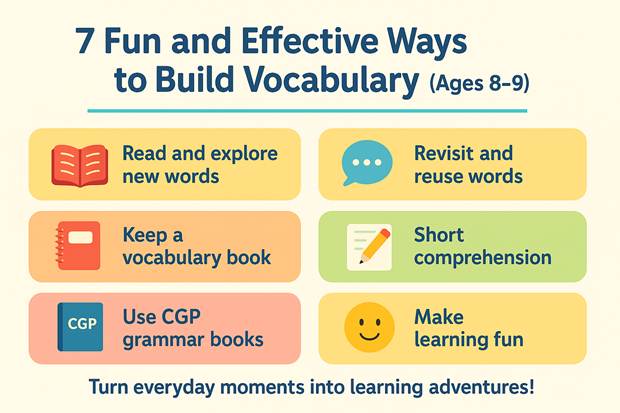
1. Encourage Reading and Learning New Words
Reading is the single most effective way to grow vocabulary. Every story, poem, or non-fiction passage introduces new words and ideas. Encourage your child to read a mix of books—stories, magazines, and even comics can spark curiosity.
When you read together, pause occasionally to talk about interesting words. Ask simple questions like:
- “What do you think this word means?”
- “Can we think of another word that means the same thing?”
- “Where else might we use this word?”
Make it interactive. Instead of quizzing, turn it into a discovery game. Over time, your child will start noticing and remembering words independently.
2. Revisit and Reuse New Words Regularly
Learning new words once is not enough—children need to hear, read, and use them repeatedly. Reinforcement is key.
A simple technique is to pick three new words a week and make them the “words of the week.” Try to weave them into your conversations naturally. For example, if the word is “gigantic,” you might say, “That cake looks gigantic!”
You can also challenge your child to use each new word in a sentence daily. This helps with recall, pronunciation, and confidence. Over time, words move from passive recognition to active use, which is exactly what we want.
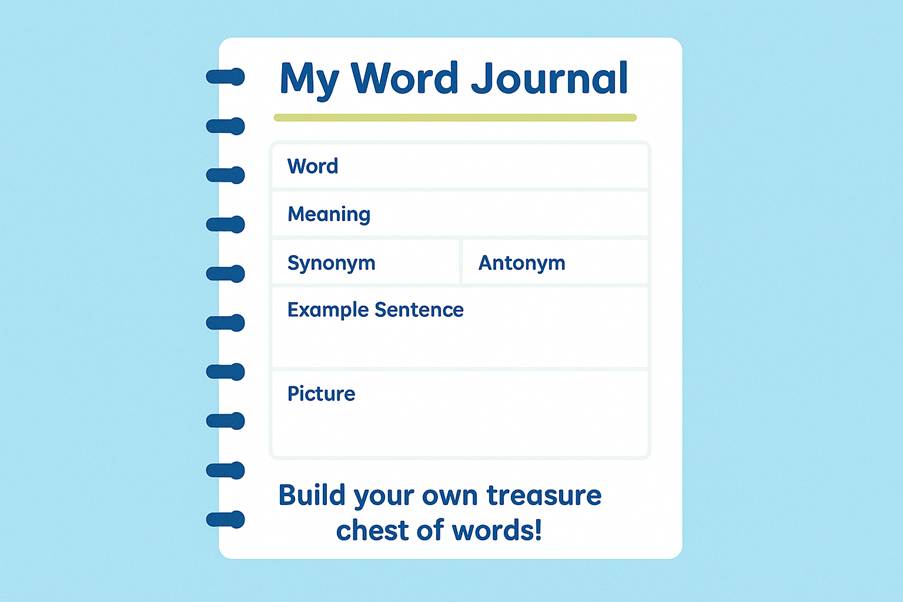
3. Create a Vocabulary Book
This is one of the most enjoyable and creative ways to strengthen word learning. Get your child a small notebook and label it “My Word Journal” or “My Vocabulary Treasure Book.”
For each new word, help your child note down:
- Meaning
- Example sentence
- Antonym (opposite word)
- Synonym (similar meaning word)
- Rhyming words or related words
Encourage them to decorate each page with drawings or stickers. For instance, if the word is “forest,” they could draw trees or animals. This visual and hands-on method appeals to creative learners and makes vocabulary practice more memorable.
4. Practice Short Comprehension Tasks
11+ preparation in Year 3 should also involve comprehension exercises as it helps children to apply vocabulary in context and understand how words shape meaning. You don’t need formal worksheets all the time—simple, short tasks after reading a page or story work wonders.
Ask questions like:
- “What happened in this part?”
- “Why did the character feel that way?”
- “Can you tell the story in your own words?”
Encourage your child to use new or descriptive words while answering. This not only checks understanding but also strengthens sentence construction and verbal expression.
If you want structured practice, you can use CGP comprehension books or online reading passages tailored for 11+ preparation in Year 3.
5. Use CGP Books (8-9 years) to Strengthen Grammar and Vocabulary
Structured learning resources can provide a balanced mix of fun and challenge. CGP books are excellent for this—they’re designed to suit children’s age and ability, offering clear explanations and bite-sized exercises.
Look for CGP books focusing on:
- Spelling, punctuation, and grammar (SPaG)
- Comprehension practice
- Creative writing
Set aside 10–15 minutes a few times a week for these exercises. Keeping sessions short and regular helps avoid fatigue while reinforcing learning. Remember, consistency matters more than duration.
6. Write About Familiar and Fun Topics
Writing helps children bring new words to life. But rather than forcing long essays, start with short, relatable topics that spark interest.
Examples include:
- A Visit to the Supermarket
- My Favourite Game
- A Day in the Park
- If I Had a Pet Dinosaur
Encourage your child to describe things vividly—what they saw, heard, smelled, or felt. You can say, “Can you use one of your new words in this story?” This gently nudges them to apply vocabulary creatively.
To make writing even more fun, let them illustrate their stories or share them aloud like a storyteller. This builds both writing and speaking with confidence.
7. Keep Learning Fun and Creative
Finally, remember that children learn best when they enjoy the process. At this age, 11+ preparation in Year 3 should still feel playful. Blend vocabulary practice with creative activities—word bingo, crossword puzzles, word hunts, drawing, or role-play.
You can even create a “Word Jar” where your child picks a word each day and uses it in a funny sentence or mini-story. Reward curiosity and effort, not just accuracy. When children feel proud of their word discoveries, they naturally stay motivated.
And most importantly—don’t worry about perfection. Year 3 is still early; the goal is to develop curiosity, not mastery. The more relaxed and fun learning feels, the deeper it will stick.
In Summary
Building a strong vocabulary doesn’t require long study hours or strict routines. It’s about making words a natural part of your child’s daily life.
Encourage reading, talk about words, play language games, and let your child write about the world they know. Over time, you’ll notice not just a richer vocabulary, but also better comprehension, writing fluency, and self-expression.
We only take 1-2-1 lessons for 11+ preparation in Year 3 on a case to case basis, as formal turoring is not necessary at this age. You can contact us for Year 3 tutions if needed.
Remember, every new word your child learns opens a tiny window to a bigger world. 🌈
[ssba-buttons]