Preparing for the 11+ Year 5 preparation UK journey can feel overwhelming for parents. for many parents and children. With increasing competition for grammar school places in the UK, it’s important to have a clear and structured approach. The good news is that with the right preparation strategy, consistent practice, and expert guidance, your child can build strong reasoning skills and perform confidently in the exam.
In this guide, we will cover a complete Year 5 preparation plan, key subjects, common mistakes parents make, and some practice questions to get your child started.
What is the 11+ Exam?
The 11+ exam is an entrance test used by many grammar schools across the UK. It is designed to assess a child’s academic ability and problem-solving skills.
The exam usually includes:
- Verbal Reasoning – word-based logic and patterns
- Non-Verbal Reasoning – shapes, sequences, and visual puzzles
- Mathematics – numerical skills and problem-solving
- English – comprehension, vocabulary, and grammar
Each school may follow different formats such as GL or CEM, so it is important to understand your target schools.
Why Year 5 is Crucial for 11+ Preparation
Year 5 is the most important year for 11+ preparation because:
- It allows enough time to build strong foundations
- Children can gradually develop exam techniques
- There is time for practice and improvement
Starting early in Year 5 gives your child a clear advantage without putting unnecessary pressure on them later. A structured 11+ Year 5 preparation UK plan helps children build confidence and skills.
Here’s a structured roadmap to help you get started effectively in Year 5.

🔍 1. Research and Shortlist Grammar Schools
Begin by Googling grammar schools in your area and shortlisting the ones you’d like your child to target. Here is an interactive map that can help you find the grammar schools closest to your area:
Next, look at:
- The school’s admissions policy and catchment area
- The exam board or test provider (GL, CEM, or school-specific)
- Any additional assessments such as creative writing, interviews, or music/sports aptitude tests
Understanding your target schools early helps you tailor your child’s preparation to the correct exam format and timeline.
🧮 2. Understand the Test Format
Every grammar school follows a slightly different testing pattern. Some focus heavily on reasoning, while others place more emphasis on English and Maths. Once you’ve shortlisted your schools, check their websites for details of the test format and topics covered. For a quick look, you can check school pages given in Exam Paper Plus – they are generally updated and will give you an idea of the school background, admission policies and test format. For example, read this page on QE, Barnet School on the Exam Paper Plus website.
This will help you create a focused study plan and avoid wasting time on areas that aren’t tested.
Step-by-Step 11+ Study Plan for Year 5
📅 Term 1: Build the Foundation (Sept – Dec)
- Start with basic concepts in maths and English
- Introduce verbal and non-verbal reasoning
- Practice short exercises daily (15–20 minutes)
- Focus on understanding rather than speed
👉 Goal: Build confidence and familiarity
📅 Term 2: Strengthen Skills (Jan – April)
- Increase difficulty level of questions
- Introduce timed practice
- Identify weak areas and work on them
- Start solving mixed-topic worksheets
👉 Goal: Improve accuracy and consistency
📅 Term 3: Exam Preparation (May – July)
- Begin full-length mock tests
- Practice under timed conditions
- Focus on time management strategies
- Revise all key topics
👉 Goal: Build exam readiness and confidence
📘 3. Recommended Books and Study Path
11+ Maths Preparation Path
To build a strong foundation in Maths, start early and progress gradually:
| Year Group | Recommended Resources | Purpose |
| Year 3-4 | Schofield & Sims | Strengthen core maths concepts |
| Year 4-5 | CGP or Bond books | Topic-based practice and confidence building |
| Year 5-6 | First Past the Post (FPTP) series | Word problems and exam-style practice |
11+ Verbal and Non-Verbal Reasoning
- CGP 10–11 Years books for Verbal and Non-Verbal Reasoning
- CGP 10-Minute Test Books for for Spatial Reasoning
- CGP Full length practice papers for challengining Verbal and Non-Verbal Reasoning practice
11+ English
- CGP 10–11 Years 10 minute test books for Spelling, Grammar, and Punctuation
- Robert Lomax (RSL) books for Creative Writing and Comprehension
- Alongside these, work with two other publishers (e.g. First Past the Post, Bond, Schofield & Sims) to cover varied question styles.
🧠 4. Build a Strong Vocabulary
A rich vocabulary makes a big difference in comprehension, writing and verbal reasoning – since half of the questions types in verbal reasoning are based on vocabulary and spellings. Explore Girish’s vocabulary resources at www.elevenplusvocab.com — they offer structured word lists and revision tools.
Encourage your child to revise new words regularly and use them in daily conversation and creative writing tasks.
⏱️ 5. Introduce Timed Practice
About three months before the exams, by when the syllabus should have been completed, start working on timed practice papers. You can use the material or resources available at home to time the papers – these can start from 8 minutes for 10 questions and grdually you can reduce it to 4 minutes for 10 questions. The exam’s speed requirements are 20-30 seconds per question. The goal is to build speed, accuracy, and exam temperament. Hence, tracking the results and reviewing incorrect answers to spot weak topics that need more attention is very important.
👩🏫 6. Monitor Progress (Especially If Using a Tutor)
If your child is working with a tutor, stay actively involved. Regularly check progress and ensure that weaknesses are addressed early. Seek feedback after every class and make sure that your child completes homework on a regular basis. Staying disciplined through this journey will reap rich rewards. Many parents request last-minute help, but effective 11+ preparation relies on steady progress, not cramming or quick fixes. A parent, tutor and a child are the three pillars or cornerstone to a successfull 11-plus preparation hence choose your tutor after careful considerations.
We train kids from Y4 across subjects of 11-plus; you can check our classes and try a class as per our trial policy. Our training is driven by techniques and we are update the parent with feedback and homework after every class.
📄 7. Practice with Realistic Mock Papers
Finally, take your 11+ Year 5 preparation UK to the next level with mock exams. These include online and offline mock papers in tution centres locally. Please keep in mind that simply solving mock after mock is not going to help. A thorough analysis of the mock with identification of gaps will help the child improve scores.
Try practice papers from Exam Papers Plus. Their papers are slightly more challenging than actual exams, providing excellent, fool proof preparation for real test conditions.
Some other mocks that have been recommended by parents are Top Dog Tutoring, SDE, XL Education, JSK Tution, Euphoria and Atom Learning. Remember, some of these mocks may be tougher than the actual exam and hence the do not stress over the scores of these mocks. Focus on the exam-like experience they provide that help to carm nerves on the day of the exam.
Top 5 Mistakes Parents Make
Avoiding these common mistakes can make a big difference in the 11+ Year 5 preparation UK journey :
- Starting too late
Leaving preparation until the last few months increases stress - Ignoring reasoning practice
Reasoning is a major part of the 11+ exam - Overloading the child
Too much study can lead to burnout - Not practising under timed conditions
Time pressure is a key challenge in the exam - Lack of consistency
Daily practice is more effective than occasional long sessions
Practice questions for the 11+ Exam
MATH
Q1. Add together: one 1p, two 2p’s, one 10p, one 20p, one 50p, one £1, and three £2’s.
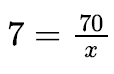
Q2. Solve
Q3. An amount was increased from 30 to 48. Work out the percentage increase.
Q4. A=32 and B=3×5. Find the lowest common multiple of A and B.
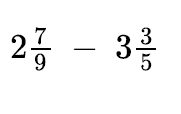
Q5. Calculate
VERBAL REASONING
Q1. Anna, Bella, Candy, Dolly and Eric took an IQ test to determine their intelligence levels. As per the test results, Anna had lower IQ than Bella. Candy had lower IQ than Dolly. Bella had lower IQ than Candy and Anna had more IQ than Eric. Which child has the highest IQ?
a. Anna
b. Bella
c. Candy
d. Dolly
e. Eric
Q2. The number in the brackets in the first two sets is related in a certain way with the numbers outside it. Figure out the relationship and complete the third set accordingly.
18 (2) 3 16 (4) 2 25 (?) 5
a. 3
b. 12
c. 6
d. 1
e. 15
There are 3 number codes given for 4 words in random order. You need to match the words to their correct codes and answer the questions that follow.
CUTE BELT CULT TUBE
5716 1746 5731
3. What is the code for BELT?
4. What is the code for LUCE?
5. Which word can be made from the letters that are coded 4,6,5,7?
The first pair of letters are related to the second pair in a certain pattern. Find out the relationship and complete the second pair in the second set accordingly. Alphabets are given to help you.
A B C D E F G H I J K L M N O P Q R S T U V W X Y Z
6. GM is to NT as IR is to
a. QZ
b. QA
c. IR
d. RI
e. QV
7. AW is to VB as CZ is to
a. WE
b. YD
c. XD
d. XE
e. WD
NON VERBAL REASONING
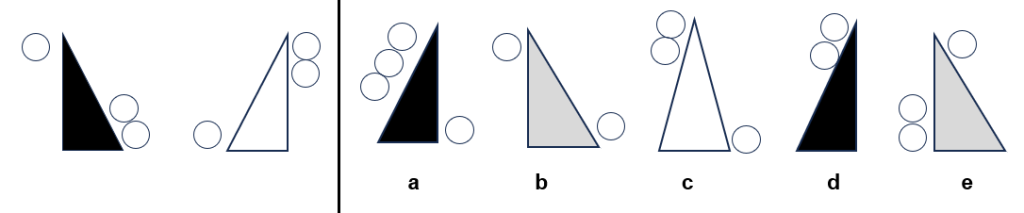
SIMILARITIES: For each question below there are two figures that are like each other in some way. Find which of the five figures on the right is most like the two figures on the left.
Q1.

Q2.
COMPLETE THE SERIES: Each of these questions has five squares on the left that are arranged in order. One of the squares is missing. One of the squares on the right should go in its place. Find which one of the five squares on the right should go in place of the empty square.
Q3.
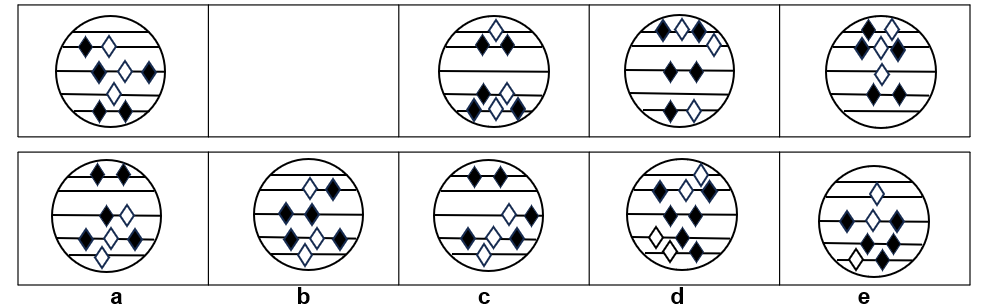
Q4.
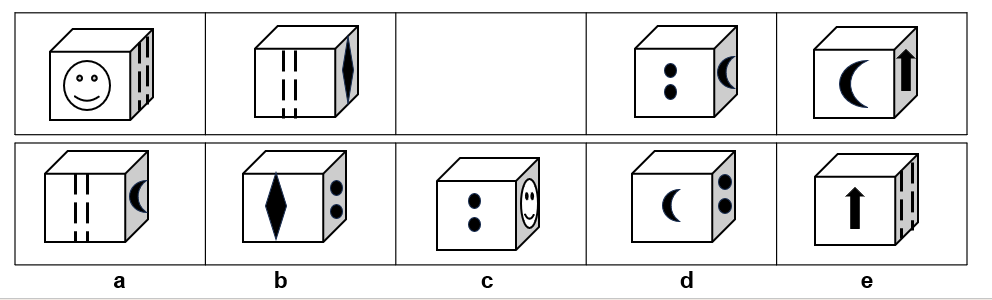
ODD ONE OUT: Each of these questions has five squares on the left that are arranged in order. One of the squares is missing. One of the squares on the right should go in its place. Find which one of the five squares on the right should go in place of the empty square.
Q5.

Q6.
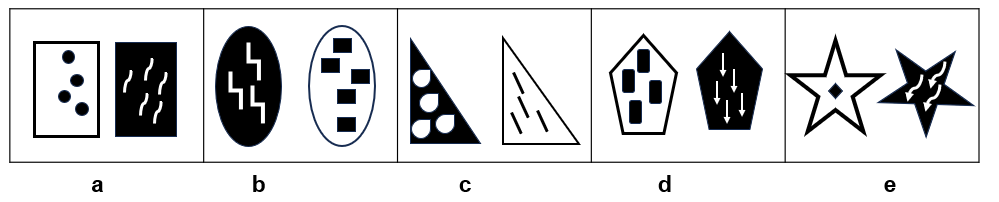
Kids can give these 11+ Practice Questions a try and message us the answers on iqreasoningacademy@gmail.com.
Frequently Asked Questions (FAQs)
Q. When should my child start 11+ preparation?
👉 Ideally in Year 4 or early Year 5
Q. How long should my child study each day?
👉 Around 20–30 minutes of focused practice
Q. Is tutoring necessary for the 11+ exam?
👉 Not always, but guided support can improve performance
Final Thoughts
Preparing for the 11+ exam in Year 5 is about building strong foundations, practising regularly, and developing confidence. With the right approach, your child can enjoy the process and perform well in the exam. With the right 11+ Year 5 preparation UK strategy, success becomes achievable.
🚀 Need Help with 11+ Year 5 preparation UK?
At IQ Reasoning Academy, we offer:
✔️ Small-group classes (max 6 students)
✔️ Personalised attention
✔️ Structured 11+ curriculum
✔️ Regular mock tests
👉 Join our 11+ programme today and support your child’s success